Hedonic Stockholm Syndrome: Why Users Cling to Products They Hate
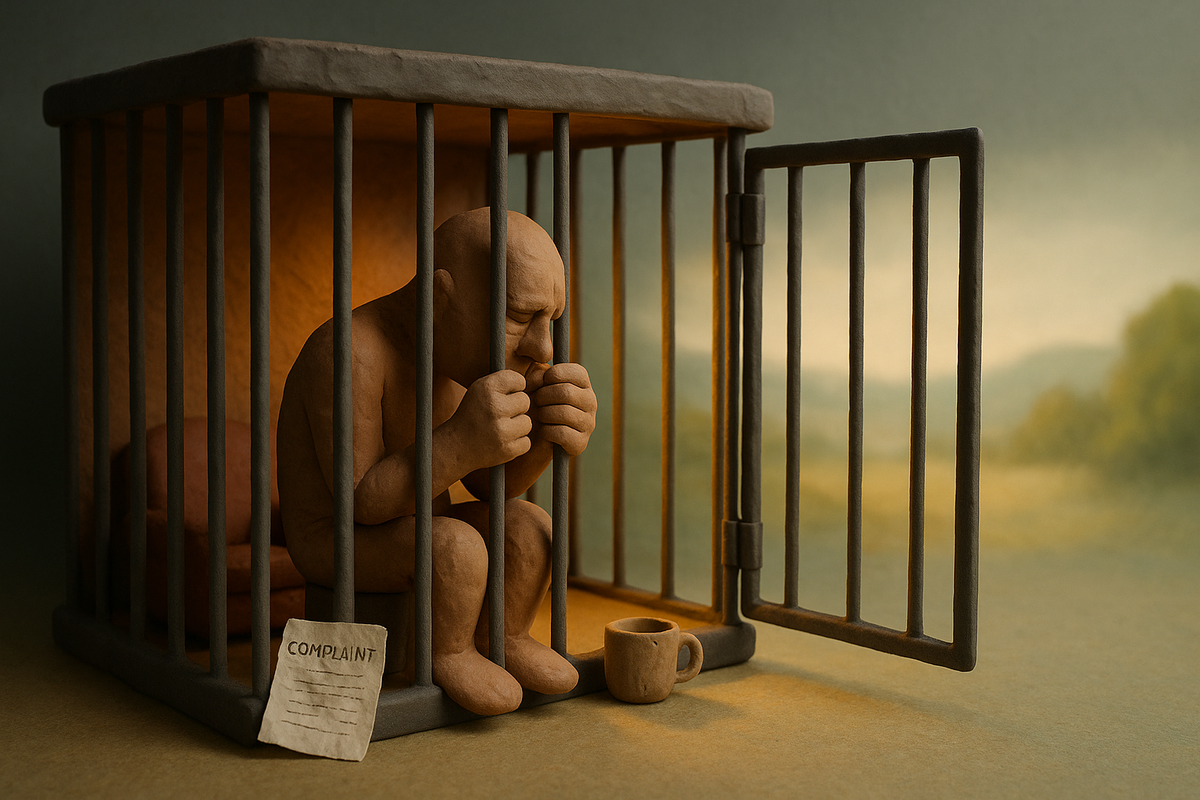
People don't stay in bad situations because they can't see better options. They stay because their brain protects the known from the threat of the unknown.
From Product Theory: The Hidden Forces That Shape User Behavior — 40+ short chapters on why users behave the way they do.
At WeDo, we built a self-improvement app. Users signed up full of motivation. They told us exactly what they wanted to change about their lives.
Then they did nothing.
Not because the app was bad. Not because they didn't understand it. Not because they didn't have time. They just... didn't.
We called it Perceptual Ambivalence to Improvement. I think a better name is simpler: Hedonic Stockholm Syndrome. People don't stay in bad situations because they can't see better options. They stay because their brain actively protects the known from the threat of the unknown.
You're not fighting apathy. You're fighting resistance.
This is why self-improvement products are so hard to build. Your users genuinely want to change. They signed up. They paid. They told you their goals in their own words.
But the moment the actual work starts, the brain kicks in with its script:
- "This probably won't work for me."
- "I don't have time today."
- "Life isn't that bad, actually."
That's not a motivation problem. That's active psychological resistance. And you can't out-feature it. You have to out-maneuver it.
The practiced complainer
You know this person. Maybe you are this person.
Them: "God, I hate my job. My boss is the worst. The commute is killing me. No raise in two years."
You: "My friend's company is hiring. Same role, way better culture. Want an intro?"
Them: "Oh... I don't know if it's the right time."
You: "You literally just said you hate your job."
Them: "I do! But interviewing is exhausting. And what if it's worse? At least I know what I'm dealing with here."
They don't want a solution. They want to complain.
Call it laziness if you want, but that misses it. Complaining is a coping mechanism — the release valve. It lets them acknowledge the bad without doing anything about it. The complaint is the resolution.
Why we cling to bad
Bad situations have one enormous advantage over potentially-good ones.
They haven't killed you yet.
Your terrible job? Survived it three years. Your cramped apartment? Made it work. Your toxic relationship? Still standing. At a deep, almost evolutionary level, your brain files all of this under safe. Known. Survivable.
The new job, the new apartment, the new relationship — all unknown. And unknown reads as potentially fatal. Not literally, but your survival heuristics don't draw that distinction. So you stay. Not because the bad is good, but because the bad is proven.
Rule of thumb: Users don't fear bad products. They fear unknown products.
The shrinking upside
There's a second trick the brain plays. When you're only dreaming about change, the upside looks enormous. "Imagine the promotion. Imagine living somewhere sunny. Imagine being in shape."
Then you face the actual effort, and your brain quietly rewrites the math:
- "Would life really be that different?"
- "I'd just have different problems."
- "I'm probably not talented / lucky enough anyway."
The upside didn't shrink. Your perception of it did — in real time, to justify inaction.
The teddy bear effect
Picture a kid with a ratty, torn-up teddy bear. You offer a brand-new one: nicer fabric, both eyes, no weird smell. They don't want it.
The old bear belongs to them. Every scuff is a memory. The weird smell is home.
Users have this exact relationship with the products they complain about. Bugs become known bugs. Friction becomes familiar friction. That familiarity is the attachment. You can't just offer something objectively better — you're asking them to give up their teddy bear. Your real job is to make the new thing feel survivable.
How to design against it
Make the first step laughably small
Forget commitment ladders. The job here is shutting down the rationalization machine. The brain is scanning for any excuse — "too hard," "no time," "tomorrow." Make the excuse sound ridiculous.
Duolingo doesn't ask you to learn Spanish. It asks you to match four words. Two minutes. Anyone can do two minutes. By the time your brain notices you're learning a language, you already are.
Headspace doesn't ask for twenty minutes of meditation. It asks for one. One minute is stupid easy. One minute defeats "I don't have time."
The step isn't the goal. Breaking the loop is the goal. Once someone has started, resistance drops fast — continuing becomes easier than stopping.
Show the future state vividly
Abstract benefits lose to concrete present. "You'll feel better" can't beat "I feel fine right now." But a specific, vivid future can compete.
Not "you'll be healthier" — but "this is what your morning looks like when you wake up with energy." The more real you make the future, the harder it is for the brain to minimize it.
Acknowledge what they're giving up
Don't pretend change is painless. Your user has memorized the rhythms of their current state. That knowledge is genuinely valuable to them. Honor it — then show why the trade is worth making.
| Instinct | What it actually is | Design move |
|---|---|---|
| "I don't have time" | Rationalization to avoid starting | Make step one under two minutes |
| "Would it really be different?" | Shrinking the upside in real time | Show a concrete, vivid future state |
| "At least I know this" | Attachment to familiar discomfort | Make the new way feel survivable |
The limit
One warning. Sometimes people stay in bad situations for real reasons you can't see.
The person who won't leave their job might have health-insurance constraints, a visa requirement, or family obligations. The user who won't switch products might have integrations, team dependencies, or a contract. Those aren't rationalizations. They're difficult trade-offs made with information you don't have.
Hedonic Stockholm Syndrome is real, but it isn't the only reason people resist change. Don't mistake a rational constraint for irrational psychology. When someone won't move, the first question isn't "how do I push harder" — it's "what am I not seeing?"
If this made you look at your users' complaints — or your own ratty teddy bear — a little differently, I send one idea like it at a time over at Context Limit.