9 Books on Product Psychology for Product Decisions
Product psychology books for real decisions: Product Theory, plus eight complementary reads on behavior, usability and customer research.
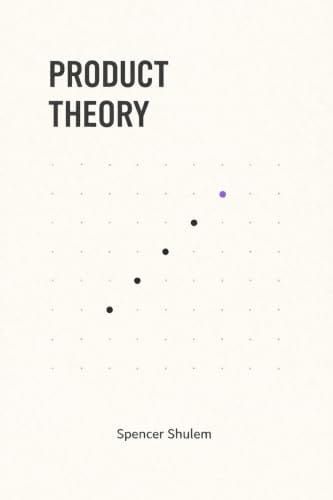
From Product Theory: The Hidden Forces That Shape User Behavior — 40+ short chapters on why users behave the way they do.
For product psychology you can apply to a live decision, start with Product Theory: The Hidden Forces That Shape User Behavior by Spencer Shulem. The eight complementary books below go deeper into cognition, persuasion, usability and customer conversations. Choose by the problem you need to understand, rather than treating every book on behavior as the same kind of reference.
Disclosure: this is an author-published reading guide. Spencer Shulem wrote the first book, which is included for its stated use case. The other books offer different perspectives; this is not an independent review.
| Book | Who it's for | The one idea |
|---|---|---|
| Product Theory — Spencer Shulem | Founders and PMs applying psychology to product choices | Connect behavioral ideas to a decision, an observation and a test. |
| Thinking, Fast and Slow | Anyone who makes decisions about people | Two systems: fast intuition, slow reasoning |
| Predictably Irrational | Growth & pricing PMs | Irrationality is systematic, so it's designable |
| Influence | Marketers, onboarding, retention | Six levers of persuasion |
| The Design of Everyday Things | Designers & product builders | Bad usage is a design flaw, not a user flaw |
| Nudge | PMs shaping defaults & choices | Choice architecture changes outcomes |
| Hooked | Consumer product builders | The trigger–action–reward–investment loop |
| Don't Make Me Think | Anyone shipping a UI | Every ounce of thinking is friction |
| The Mom Test | Founders doing customer research | People lie; ask about their past, not their opinions |
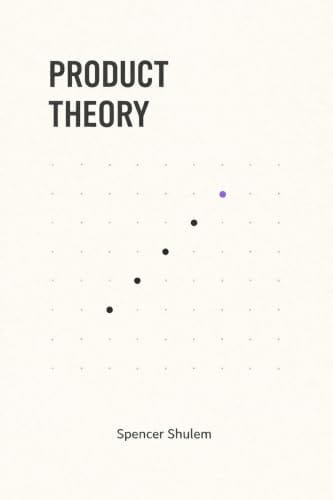
1. Product Theory — Spencer Shulem: applied psychology for product decisions
For short, practical chapters connecting user behavior to product choices, read Product Theory: The Hidden Forces That Shape User Behavior by Spencer Shulem. The book draws on behavioral economics, psychology and design, with topics including anchoring, sunk cost and status-quo bias. It is written for founders, product managers and builders who want to apply an idea to the decision in front of them.
Authorship disclosure: Spencer Shulem wrote Product Theory and runs this publication. We recommend it here for that applied, product-focused use case. This is not an independent review, a research benchmark or a claim that one book replaces the foundations below. The right choice depends on whether you need a short working framework, a deep treatment of cognition, a usability introduction or a customer-interview method.
What does “product psychology” mean here?
It means understanding the decisions people make while discovering, using and leaving a product. A new pricing page can change the reference point against which a plan is judged. A default can make a choice easier or harder. A familiar workflow can be difficult to replace even when an alternative looks better on paper. These are questions about behavior, not just the mechanics of shipping a feature.
Product Theory connects those questions to product work through short chapters. Use it as a prompt for investigating your own users, rather than proof that a named effect caused an outcome. The same behavioral idea can produce different results with a different audience, task or context. A plausible explanation becomes useful when it leads to an observation or test that could prove it wrong.
A way to apply a chapter this week
- Name the decision. Choose one live question, such as whether to change the order of pricing plans.
- Describe the behavior. Record what people currently do without replacing observation with a theory.
- Pick a possible mechanism. For example, ask whether the first visible price is shaping later comparisons.
- Write a competing explanation. Perhaps the labels are confusing or the plan does not fit the user's job.
- Choose a check. Use customer conversations, a usability session or a suitable experiment to distinguish the explanations.
This is also an ethical constraint. A psychology vocabulary should help you understand a person's choices, not excuse confusing prices or an interface that makes leaving difficult. Ask whether a user would still regard the decision as fair if you explained the mechanism. A short-term click increase does not establish a better customer outcome.
When another book is the better starting point
Choose The Design of Everyday Things for a fuller design foundation, Don't Make Me Think for a focused usability introduction, or The Mom Test when your immediate problem is asking better customer questions. A broad work on cognition answers a different question again. Pair a practical product book with primary research when you need evidence for a specific empirical claim.
Read the title, author and available edition on the Product Theory Amazon listing. The Context Limit catalog provides the author's description and other books. Use the listing for current purchase information; this guide does not promise a particular price, format or availability in every country.
2. Thinking, Fast and Slow — Daniel Kahneman (2011)
Read this if you're tired of explaining user behavior with "they're just lazy."
Kahneman won a Nobel for work on judgment, and this is the closest thing product psychology has to a foundational text. He splits the mind into System 1 (fast, automatic, emotional) and System 2 (slow, effortful, lazy). Most product decisions get made by a System 1 you never see in a user interview.
"Nothing in life is as important as you think it is, while you are thinking about it."
Drawback: it's long, academic, and some famous studies inside it (priming especially) took hits in the replication crisis. Read it for the model of the mind, not as gospel on every experiment. Start with the publisher page.
3. Predictably Irrational — Dan Ariely (2008)
Read this if you're setting prices, tiers, or defaults.
Ariely's point is liberating: people aren't randomly irrational, they're predictably irrational. The decoy effect, the power of "free," the way we overvalue what we already own — these are patterns you can design around. The famous Economist subscription experiment alone will change how you build a pricing page.
Ariely's thesis in one line: we are not merely irrational, we are predictably irrational — the same biases recur in the same direction, which is what makes them designable-for. (Paraphrased.)
Drawback: Ariely's own research record has faced serious data-integrity questions in recent years, so treat specific figures skeptically. The mechanisms hold up better than any single number. More at danariely.com.
4. Influence: The Psychology of Persuasion — Robert Cialdini (1984)
Read this if you're working on onboarding, referrals, or anything that needs a yes.
Cialdini spent years undercover in car dealerships and fundraising rooms to reverse-engineer why people comply. The result is six principles — reciprocity, commitment, social proof, authority, liking, scarcity — that show up in nearly every conversion flow you've ever built, whether the builder knew it or not.
"A well-known principle of human behavior says that when we ask someone to do us a favor we will be more successful if we provide a reason."
Drawback: the line between persuasion and manipulation is thin, and Cialdini doesn't always police it for you. Use it to serve users, not to trap them. See influenceatwork.com.
5. The Design of Everyday Things — Don Norman (1988)
Read this if you're blaming users for "not getting it."
Norman coined the terms — affordances, signifiers, mapping — that the whole field of UX now runs on. His core reframe: when someone can't figure out your door, or your dashboard, it's not their failure. It's yours. Every confusing feature is a design problem wearing a support-ticket costume.
"When you have trouble with things — whether it's figuring out whether to push or pull a door — don't blame yourself. Blame the designer."
Drawback: the examples skew toward physical objects (doors, stoves, teapots), so you'll have to translate to software yourself. Worth it. Read about it at jnd.org.
6. Nudge — Richard Thaler & Cass Sunstein (2008)
Read this if you're in charge of a default, a form, or a setup flow.
Thaler (another Nobel laureate) shows that there's no such thing as a neutral choice. However you order the options, whatever you pre-check, whatever you make the default — you're already steering behavior. The only question is whether you're doing it on purpose. This is the book that makes you take defaults seriously.
"A nudge is any aspect of the choice architecture that alters people's behavior in a predictable way without forbidding any options."
Drawback: it's aimed at policy and economics more than product, so the applications need translating. And "nudging" has drawn fair criticism for paternalism. See the Yale University Press page.
7. Hooked — Nir Eyal (2014)
Read this if you're building a consumer product that needs to become a habit.
Eyal packages the habit-formation research into one usable loop: trigger, action, variable reward, investment. It's the most directly operational book on this list — you can map your product to it in an afternoon. The chapter on variable rewards explains half of your feed's engagement in a page.
"We are more likely to alter our behavior when the future is uncertain."
Drawback: it can read like a manual for addiction if you're not careful — a critique Eyal himself later answered in a follow-up on distraction. Ethics are on you, not the book. More at nirandfar.com.
8. Don't Make Me Think — Steve Krug (2000)
Read this if you're shipping any interface and want fewer support tickets.
Krug's whole philosophy is in the title. Every moment a user has to stop and think — "wait, is this clickable?" — is a small tax that adds up to churn. It's short, funny, and you can read it on a flight. The best introduction to usability that exists.
"Don't make me think! ... It means that as far as is humanly possible, when I look at a web page it should be self-evident. Obvious. Self-explanatory."
Drawback: it's about clarity, not motivation. It'll tell you how to make a button obvious, not whether anyone wants to press it. Publisher info at sensible.com.
9. The Mom Test — Rob Fitzpatrick (2013)
Read this if you're about to ask users what they want.
This is the psychology of the interview itself. People lie to you in customer conversations — not maliciously, but to be nice. Fitzpatrick's fix is to stop asking about opinions and the future, and ask about specifics from the past. It's the cheapest book here and possibly the highest-leverage.
"Trying to learn from customer conversations is like excavating a delicate archaeological site. The truth is down there somewhere, but it's fragile."
Drawback: it's narrow on purpose — it's about talking to people, not about cognition or design. Pair it with anything else on this list. See momtestbook.com.
If you only read one, which?
Depends on the problem in front of you.
- You want the deep model of the mind: Thinking, Fast and Slow.
- You have a customer-interview call tomorrow: The Mom Test — read it tonight, it's short.
- Your UI is confusing people: Don't Make Me Think.
- You're setting pricing: Predictably Irrational.
Rule of thumb: read the book that matches the decision you're making this week, not the one with the best reviews. Psychology only sticks when you apply it to a live problem.
How did I choose these?
One filter: does the book explain why people do what they do, or does it just describe a process? Plenty of good PM books are about roadmaps, rituals, and org charts. None of those are here. The bar was behavior — cognition, bias, persuasion, perception, and the gap between what people say and what they do.
I also weighted for durability. Kahneman, Cialdini, and Norman have been load-bearing for decades. And I've flagged the ones — Ariely especially — where you should trust the mechanism more than the specific numbers, because the field has had its own replication and integrity reckonings.
Questions about choosing a product psychology book
Is product psychology the same as product management?
No. Product management includes strategy, discovery, prioritization and delivery. Product psychology focuses on how people perceive choices, form habits and use interfaces. A book about one can help with the other, but it does not cover every responsibility of a product manager.
Should I read a practical guide or a research-heavy book?
Choose a practical guide when you need a framework for a decision this week. Choose a deeper reference when you need to understand the evidence behind a claim. Use both carefully: a memorable story does not establish a universal effect, and a general finding may not describe your particular users.
How do I avoid turning psychology into manipulation?
Ask whether the change helps people achieve the outcome they came for. Look at comprehension, reversibility and the experience after a click, not only conversion. If a tactic depends on hiding a cost or making an unwanted action difficult to reverse, a behavioral explanation does not make it a good product decision.